
Among the great ocean liners of the early 20th century, RMS Aorangi holds a special place. Though she spent most of her working life far from British shores, Aorangi was very much a product of Clydebank skill and innovation, having been built in Glasgow at a time when Scottish shipyards led the world in marine engineering, she was constructed by Fairfield Shipbuilding and Engineering Company at Govan and launched in 1924. She was built for the Canadian-Australasian Line to operate the long Pacific route linking Canada, New Zealand and Australia — one of the most demanding liner services of the era. Her name came from the Māori name for Mount Cook, reflecting the strong New Zealand connection she would maintain throughout her career.

At 17,491 gross registered tons and measuring over 600 feet in length, she was a substantial liner for her day. What truly set her apart, however, was her propulsion system. Like her near-sister RMS Niagara, she was powered by turbo-electric machinery — an advanced and relatively rare arrangement at the time. Steam turbines drove electrical generators, which in turn powered electric motors connected to the propellers. This system offered smoother operation, reduced vibration and excellent manoeuvrability, though it came at the cost of increased complexity.
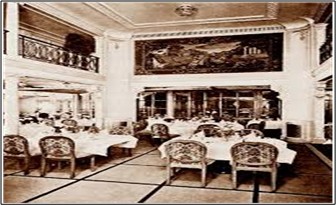
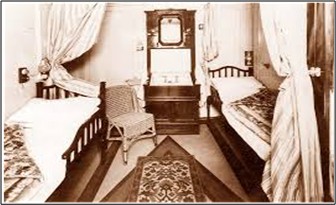
Designed to carry around 1,300 passengers across three classes, she was fitted out with comfort very much in mind. First-class passengers enjoyed spacious cabins, elegant dining rooms and lounges, while even third-class accommodation was considered generous compared with earlier liners. On a Pacific crossing that could take nearly three weeks, comfort was not a luxury but a necessity. From her entry into service in 1925, Aorangi became a familiar and much-loved sight on the Vancouver–Sydney–Auckland route. She quickly gained a reputation for reliability and steadiness in heavy seas — a vital quality on the often rough Pacific. For many years she was the largest and fastest ship on the route, playing a key role in maintaining mail, passenger and commercial links across half the globe. She was considered luxurious by Southern Hemisphere standards, especially for long Pacific crossings. Interiors were elegant but not over-the-top—more refined and practical than the flashy Atlantic liners. Think solid craftsmanship, tasteful woodwork, and reliability rather than glamour. Because of her route, Aorangi became an important link between Australasia and North America, carrying: passengers (some notable travellers, diplomats and performers, Mail (hence the RMS – Royal Mail Ship designation) and cargo.
Like so many civilian ships, her career was dramatically altered by the Second World War. Requisitioned by the British government, she was converted into a troopship, her elegant interiors stripped out to make room for thousands of servicemen. During the war she transported troops across the Indian and Pacific Oceans, sometimes carrying more than 5,000 personnel at a time.
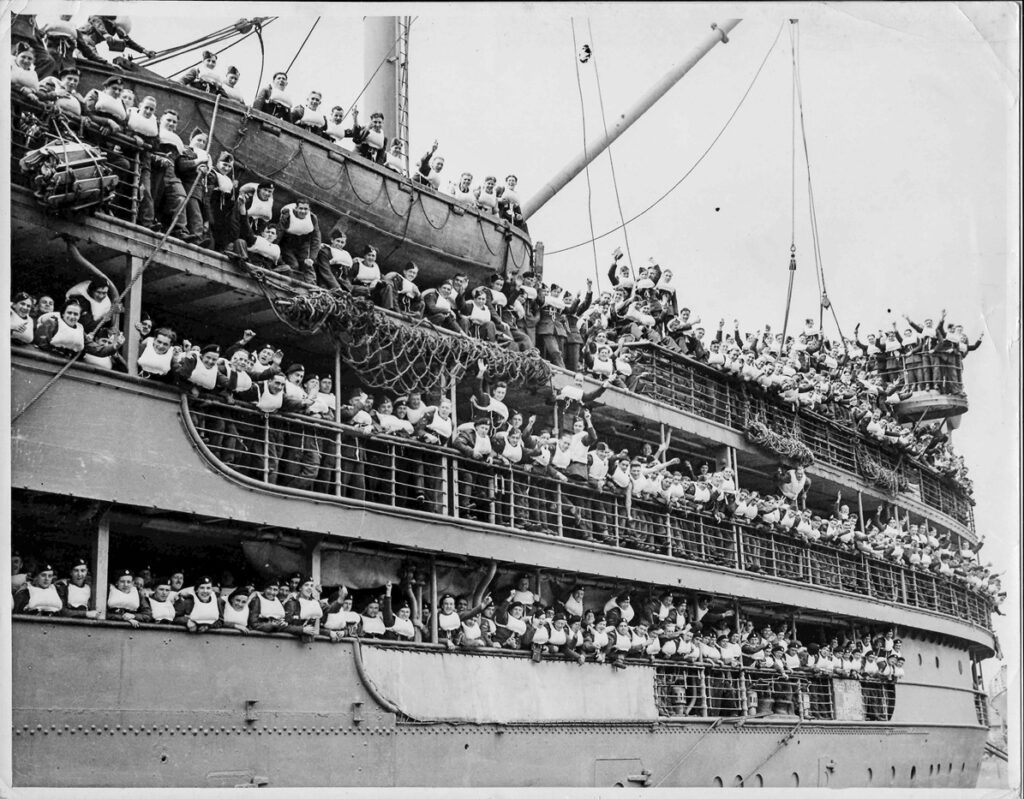
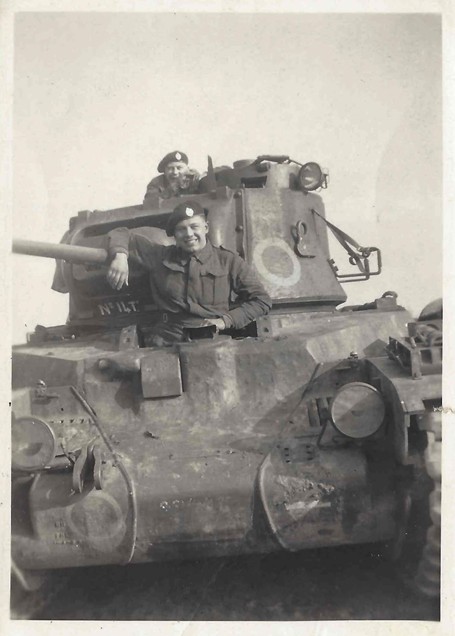
So in 1942, my Dad Harry Platt left the shores of Britain to go to war as Sergeant Platt – Tank Commander. He sailed aboard the ‘Aorangi’ via Cape Town to join General Montgomery’s forces massing in the Middle East. My Dad is at the front of the tank.
Despite the dangers of submarine and air attack, Aorangi survived the conflict unscathed — a testament to both her design and the skill of those who sailed her.
After the war, she was returned to civilian service and refitted, though changing travel patterns and the rapid rise of air travel were already beginning to undermine the golden age of the ocean liner. Even so she continued to serve with distinction into the early 1950s, still admired for her solid Clyde-built construction and dependable performance.
By 1953 her fate was sealed. Increasing operating costs and declining passenger numbers made retirement inevitable. In 1954, RMS Aorangi was sold for scrap and broken up in Dalmuir — bringing her story full circle back on the River Clyde where it had begun three decades earlier.
Aorangi was designed to carry first, second, and third-class passengers, with an emphasis on comfort rather than outright speed.
Here are some photos of Aorangi before she was stripped for military service:-
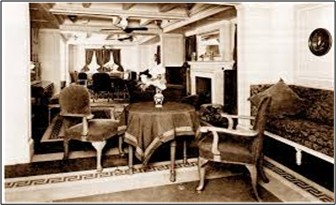
Aorangi was a fabulous ship that had a very successful and varied career.
Some Additional Information:-
Launched: 1924
Completed 1925
Tonnage: About 17,500 gross tons
Speed: Roughly 18 knots, very respectable for her era
Owner / Operator:
Union Steam Ship Company of New Zealand
Dimensions
Gross Register Tonnage: ~17,500 GRT
Length (overall): approx. 600 ft (≈ 183 m)
Beam: approx. 75 ft (≈ 23 m)
Draught: approx. 30 ft (≈ 9.1 m)
Twin-screw propulsion
Power output:
~13,000–15,000 shp (estimated)
Service speed:
~18 knots
Maximum speed:
~19 knots (on trials)
Construction
Hull:
Steel, riveted construction
Decks:
Multiple steel decks with teak overlay in passenger areas
Superstructure:
Steel, with traditional liner profile
Passenger & Crew Capacity (as built)
First Class: ~200
Second Class: ~150
Third Class: ~400
Total passengers: ~750
Crew: ~350
(Passenger numbers varied over her career, especially during refits.)
Classification & Registration
Class: Lloyd’s Register
Designation: RMS (Royal Mail Ship)
Later Modifications.
Originally had one funnel but later a second funnel was added.
Converted for troopship duties during WWII so passenger accommodation simplified
Increased lifesaving and military equipment
